
Discovering Spain-inspired presence in NYC
Tia Pol in Chelsea is one of the best examples of the Spanish restaurants and tapas bars boom in New York.André Mello/©ICEX
Author: José Guerra/©ICEX
There are many ways to approach New York City, the informed traveler knows as he compares travel guidebooks side by side. That any of these sources would propose a Spain-oriented itinerary through the city is unlikely. "There are already so many things to see," the traveler might conclude.
Yet a keen eye might suggest a revision to the itinerary after noticing a growing, captivating presence that was too faint to notice just a decade ago. From fashionistas to foodies, from moviegoers to gallery hoppers, from theater lovers to wine aficionados and historians, a vivacious Spain-inspired presence doesn’t go unnoticed these days. Designers have set up shop, Spain-infused cultural events unfold across town, and Spanish flavors and wines are as ubiquitous as ever before.
Why now?
Come the 90’s and folding into the new millennium, Spain has evolved into a must-visit destination for culinary savants everywhere seeking a new approach, while critics applaud Almodóvar’s film creations and Calatrava’s recent architectural works. The craving for a new look at things seems to have impregnated every discipline and the creative spark, that same unpredictable, at times temperamental spark that has yielded geniuses in many arenas throughout Spain’s history, succeeded in lighting dozens of slow burning bonfires in the night of New York City.
It is reminiscent of la noche de San Juan (Joan, Xoan, Jon, depending on where you put your finger on Spain´s map), one of the country’s most beautiful celebrations. It marks the beginning of the summer with countless bonfires dotting the night in the countryside, whereas neighborhoods in the cities wake up to the sound of petardos (firecrackers) in anticipation of a new season.
There were pioneers, late-nineteenth-Century-and-beyond beacons who settled on this shore and inadvertently blazed the trail, lit a fire, for others to follow and still linger in our collective memory. Luckily, a few of them – La Nacional, El Faro, Repertorio Español - are still around, their story intertwined with that of their neighborhoods. There were, also, those - the Hispanic Society of America, Tia Pol - who fell for Spain while globetrotting and came back determined to share the experience.
Our proposed itinerary will take you from Washington Heights to Brooklyn, from Queens to Soho, from Chelsea to the Upper East Side and the many neighborhoods in between; from a taste of old vine tempranillo (Tinto Fino) to a sneak preview of new, groundbreaking architecture (Calatrava`s World Trade Center Transport Hub). Our encounter with New York, through Spanish eyes, could start in almost any corner of the city.
An ocean of tapas in Chelsea

We start in Chelsea, traditionally a hotbed for Spanish restaurants. "If only they knew," seems to mutter chef Alejandra Raij from the kitchen as she says adios to, and tries not to lose sight of, a ración (tapa´s slightly larger sister) of pil pil salt cod – a decades-old classic and a precursor of magic techniques by Spanish chefs to follow years later – that just left the kitchen as it lands on a patron's table. Point taken: tapas are as much a question of size as of flavor and technique.
The regulars know indeed. Leave it to Alejandra and Eder Montero to turn a small place into a big destination. At Txikito, a zurito (small glass of draft beer) sets the tone for a Basque-focused evening, a zooming in move that allowed the duo to explore their roots and educate a curious clientele about the rich gastronomy – expect always a twist and a bow to local ingredients – of Eder´s native Bilbao and neighboring San Sebastian in the Basque Country. The bacalao al pil pil, a benchmark for contemporary cuisine, is followed by a beautifully executed ensaladilla rusa, of humble origins and to be found anywhere in Spain, more likely at cafeterías and corner bars where so many people in Spain connect on a daily basis. Txikito aims for connection and succeeds.
Not far away, El Quinto Pino, echoing Madrid´s calle Huertas, becomes, with its flavorful bites and ingenious cocktails (the horchata featuring brandy de Jerez), the perfect springboard for a night out. Viva el aperitivo! seems to bounce back and forth between the ancient mirrors. Come aperitivo time, a complimentary tapa comes along with the glass of wine we just ordered, in pure Madrid style. We loved the berenjena con miel, fried eggplant with honey and sherry (of Andalusian and Moorish origins) and the chickpeas with spinach and pimentón (a type of smoked paprika from Spain) both perfect options for vegetarians.
Before el Quinto Pino, there was Tia Pol, "testimony to an on-going love affair with Spain," according to New Orleans’ own Mani Dawes and Heather Belz, a native of Memphis. When it opened on 10th Avenue in the summer of 2004, it triggered a tapas renaissance in Chelsea. A niño rebelde bocadillo (chorizo with chocolate baguette) toys with childhood memories and showcases a gutsy, refreshing approach to Spanish cuisine. New Orleans signature sandwich, the po’ boy speaks Spanish here, piled with layers of crispy squid, alioli, tomato and lettuce.
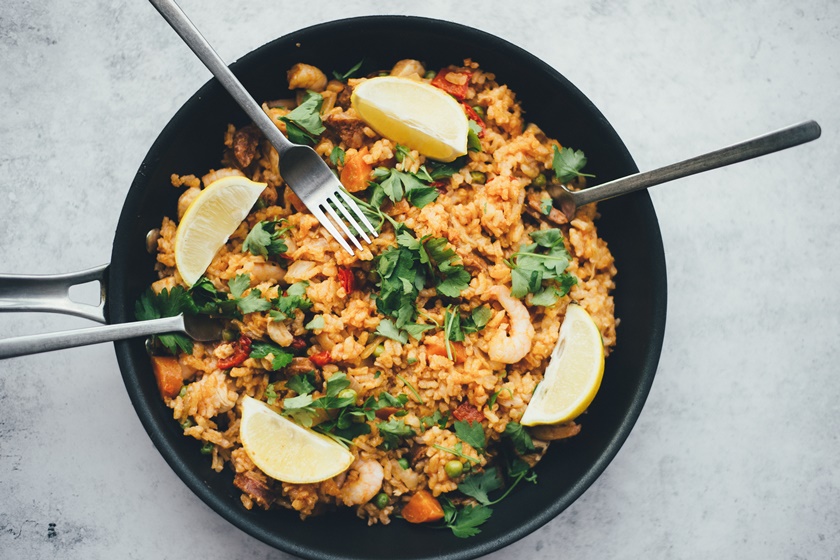
The rice dishes at La Nacional –operating since 1868- had won widespread praise. When indefatigable Lolo Mansó decided in 2008 to step up his game, paella game that is, with Socarrat on 19th street, it became an immediate favorite, also among restaurant critics and a sophisticated clientele. Socarrat Bar de Vinos opened next door recently. Socarrat won us over instantly with dishes such as the paella de la huerta (paella with vegetables) and the arroz negro (rice with cuttlefish in its ink), with luscious colors.
Furthermore, the contrast allowed one to put things in perspective: seriously, is there a better suited place than la Nacional anywhere to enjoy a la Liga soccer game while enjoying comfort food? A seasoned expat and the new kid on the block share table here on any given Saturday afternoon watching fútbol while sipping an ice-cold Estrella de Galicia beer and nibbling on an anchovy topped piece of bread.
We walk a couple of blocks East. As a high school student in the 80’s, Yann de Rochefort trotted the streets of Barcelona. Once he settled in New York, his vision of a small temple to high-cuisine-in-miniature materialized at Boqueria. Devoted fans flocked to the 19th street venue and later on to the new Soho outpost, only footsteps from Custo Barcelona, for a taste of dates stuffed with marcona almonds and Valdeón cheese, wrapped in hot bacon and, every Sunday, to savor delicious suckling pig.
Soho: the advent of new Spanish fashion

We wander through the streets of Soho looking for a pair of shoes. "Our dream is to walk very close to Earth" reads a sign at Camper, which translates to peasant in Catalan. Not surprisingly, they recreated a rustic old peasant´s shoe in one of their original designs. In their dream they are joined by hundreds of happy city “campers” that now wear their comfortable yet stylish shoes around town. Not far away, Mascaró’s shoes prove that sophistication and comfort can go hand-in-hand.
Spanish fashion has made bold inroads into the local scene, with Desigual –not far from NYU’s campus- a local hit, Agatha Ruiz de la Prada, a temple to joyful colors on Wooster street and Custo recurringly one of the hottest tickets in Mercedes Benz fashion week. Mango, with a long catwalk in the center of the store making us even more aware that we are in a fashion capital, offers stylish alternatives for the urban woman. At Tous, a purple fur bag adjacent to a watch catches our eye and remind us of the long journey – from its beginnings in Barcelona- of this accessory oasis.
It might hit you at Despaña, Manhattan´s outpost on Broome street of the Queens’ original Spanish food store, while sipping a chilled horchata de chufa (a drink from Valencia, made of tiger-nuts) surrounded by bags of bomba rice and paella pans. Valencian architecture's love affair with the city had unfolded way before Santiago Calatrava`s World Trade Center Transport Hub at Ground Zero project – the model recently exhibited at the Queen Sofía Spanish Institute- was unveiled. Rafael Guastavino arrived in New York at the end of the 19th century to provide a new face to countless public spaces, his namesake vaults and tiles ubiquitous from Ellis Island to the City Hall subway station to Grand Central’s Oyster bar to the Bridgemarket under the Queensboro Bridge to Carnegie Hall, among many others.
From Lower East Side to East Village to Washington Square
We finish a Majorero cheese and mojo verde-spread bocadillo at Despaña, wave goodbye to owners Marcos, a native of Asturias, and Angélica Intriago and walk West into the Lower East Side with our grocery bag full of goodies. We are cooking tonight! We make a short stop at Whole Foods on Houston to get a bottle of Inédit, a beer created by Estrella Damm together with chef Ferran Adrià, Juli Soler and elBulli team to accompany food.
We pay a visit to one of our favorite chefs in town. At WD-50, chef Wylie Dufresne is getting ready for a trip to San Sebastian Gastronomika, an annual international gastronomy congress in northern Spain where he has been a presenter for the last eight years. A generous exchange of ideas and camaraderie is a common feature among top chefs. We devour a cold fried chicken with buttermilk-ricotta, tabasco and caviar, a mar y montaña dish that “honors the tradition of delicious leftovers." These are not your usual leftovers though, with the chicken leg meat cooked sous vide and the buttermilk gelled to resemble ricotta.
Not far away, the Angel Orensanz Foundation for the Arts, housed in the former Ansche Chesed Synagogue (1849), becomes a momentary haven of peace in our afternoon walk-arounds and, on a regular basis, "an artistic and cultural resource open to artists, writers, thinkers and leaders from all over the world, and to the community around us". Born in Aragón, Orensanz has resided and exhibited his work in New York since 1986.
There are moments at Tinto Fino - New York's first all-Spanish wine shop - when one may feel back in elementary school, surrounded by wall maps, chalk sticks of all colors, and endless curiosity of those filling up the room. Even the young lady with her hair arranged in a bun and fixed with a carnation, at the door sign might remind you of that geography teacher your classmate had a crush on. Kerin Auth will gracefully suggest a wine to pair with the eclectic dishes concocted in the small BYOB (bring your own bottle) restaurants nearby. "What kind of food are you having tonight? Indian? Try this one." The range of selection is larger than what the square footage would suggest, with more than 80 Rioja labels in stock.
Night after night at Degustation Wine & Tasting Bar, chef Wesley Genovart approaches the art of cooking with the same solemnity that an actor takes center stage in Broadway. As in any good play, what seems –it is not - effortless coordination allows for engaging improvisation and, if lucky, for a glimpse into the "creative process." "Care for a taste of the dessert I am working on for the fall menu?" The whole kitchen happens to be the stage here, with Wesley giving the final touches to a trio of sardines, while Wine Director Nadine Proctor, arm fully extended, pours a glass of txacoli. Think of a Kabuki, where a story is told with the help of the actors’ precise movements. A native of Mallorca, Genovarts´s story will tell of seasonal ingredients and showcase uplifting flavors via au-courant, innovative techniques.
We make a stop at King Juan Carlos I Center at NYU. Since it opened in 1997 the center has embodied NYU´s commitment to Spain and Latin America. The center became increasingly a gathering point of writers, filmmakers and the cultural avant-garde. Corto Circuito, the latino short film festival of New York, became an instant hit when it first opened and will celebrate its seventh edition here in 2010.
Spanish Women Behind the Camera, a film series, debuted in 2009 to similar acclaim. For an in-depth look at Spain´s most recent and relevant movies, the Film Society of Lincoln Center presents the Spanish Cinema Now Festival each December. For year-round theater in Spanish, from García Lorca to Vargas Llosa to Isabel Allende, Repertorio Español presents plays in Spanish of interest to the Hispanic/Latino community.
Union Square: a flavor odyssey

Tia Pol has been a forerunner of the new tapas craze in Chelsea, but East of Union Square Casa Mono and the adjacent Bar Jamón became the consecration of produce-led tapas as the main character of any serious dinner, one with fresh ingredients and tons of ingenious ideas by a devoted team. Barcelona´s Cal Pep and its market-based menu may have been an early point of reference, but it was chef Andy Nusser´s consistently inspired food - Duck Egg with Mojama (dried tuna) anyone? – and Wine Director Nancy Selzer´s insightful play-along pairings – as the mindblowing Foie Gras with Cinco Cebollas paired with a González Byass’ Palo Cortado - that turned this restaurant into a must-visit in any list. As we prepare to leave, lunch service having just started, chef de cuisine Anthony Sasso is heating up the plancha – an indispensable piece of equipment here- to prepare a couple of cuttlefish raciones.
Not far away, ABC Carpet took a look – resulting in Pipa, Tapas y Más - at Spain´s pantry to build up an accessible menu for those in a shopping spree to enjoy. The lamps hovering above patrons’ heads are for sale, so might be the table they are seating at. For now, however, while sampling manzanilla olives, Serrano ham and stuffed piquillo peppers, the table is all theirs.
Where the wild things are An easy to understand, market-based menu and a lofty, convivial atmosphere turned Mercat on Bond street into an instant hit. Voices overlap and at times it feels like we are in a market indeed. Batman went obscure in The Dark Knight, so did Spiderman in the third sequel and Mercat went “clandestine” with Mercat Negre, its new outpost in Brooklyn.
High cuisine at affordable prices may seem like a mutiny to any business plan, but the lessons of bistronomy, a movement started in Barcelona that brings a gastronomic experience closer to the regular customer who can´t afford a high ticket, resonated with Jaime Reixach and team. We loved the croqueta d’espinacs amb panses i pinions (spinach, raisins and pine nuts croquette, echoing the traditional espinacas a la catalana) and the bacallá confitat amb tomaquet ratllat i pastilles Juanola (cod confit with crushed tomato & licorice).
We wrap up with a xurrus amb xocolata and walk to Bar Celona, a new, swanky tapas lounge conceived by owner and ultimate hostess Cynthia Diaz with a Latin fusion tapas menu – featuring ventresca tuna pâté or braised oxtail with julienne piquillo peppers - by chef Jordi Lavanderos, an extensive Spanish wine list and enticing cocktails. We warm up near the cozy fireplace and get transported to Old Hollywood as the evening – and our pilgrimage to Williamsburg – comes to an end.
The L subway takes us back to the island.
Midtown: looking for paradise
Early Saturday morning in spring in midtown Manhattan. A young couple is meeting for lunch at one. There is enough time for some shopping.
She starts at Pronovias. The sparkling new, easy to navigate flagship store becomes a sanctuary, a guarded moment of solitude for the bride to be. Floor after floor with options for every pocket – from Mota to Sposa to Saab - to look for a gown for the big moment. It might be slowly approaching, but today it is just her out in the city enjoying the arrival of spring. There is still time to check a pair of shoes at Manolo Blahnik, a native of the Canary Islands.
He enters Zara’s flagship store, across from the main branch of the New York Public Library, and heads to the men´s section. A new season calls for a change of wardrobe.

They meet al la Fonda del Sol at one. "What have you been up to?" he asks. She elaborates on the visit to Manolo Blahnik but decides to conceal the visit to Pronovias, just for now. They catch up albariño glass in hand as a succession of tapas – starting with salt cod croquetas with romesco sauce and finishing with buñuelos (light dough fritters) with cinnamon - as chef Josh Dechellis makes its way to the table. Before hopping on the subway at Grand Central Station headed downtown, he'll make a quick stop at Murray’s Cheese for some Serrano ham, a fig cake and Manchego cheese.
She heads to Instituto Cervantes at Amster Yard and checks out a book at the library. With El amor en los tiempos del cólera, she will let her imagination fly. She heads to Solera two blocks down and sits at the charming bar area, orders a fino with marcona almonds and turns to the book´s first page while waiting for a girlfriend to arrive. At Solera, Rufino López and Ron Miller work their magic to transport the patrons to albariza (white vineyard soil in Jerez) land everyday and have been gracefully educating their customers about Spain´s gastronomy for years.
Not far away, we let our imagination get loose at Lladró, where familiar moments are depicted with as much detail as a journey through ancient Egypt (Queen of the Nile, "a landmark in the history of art and porcelain"). An army of porcelain figurines wishes us farewell as we head North.
In the Heights: the Hispanic Society of America
At some distance, as if willing to go unnoticed, a bronze statue of the Cid Campeador guards the entrance of the Hispanic Society of America. Huntington´s "love poem to the Spanish people" was probably ahead of its time when it first opened in 1904. It remains, today, home to the most unexpected wealth of Spanish related art anywhere outside Spain, with works by Velázquez (Portrait of a Little Girl) and El Greco (Holly Family), to name just a few.
At the museum’s main court, Goya’s Duquesa de Alba stands tall, authoritative, index finger to the ground. A few footsteps away Sorolla’s room contains a series of 14 paintings, The Provinces of Spain, that honors the diversity of its many regions and cultures and is a testament to his mastery of light. We enter the library, one of our favorite places, offering "unrivaled resources for researchers interested in the history and culture of Spain, Portugal, and the Americas". It is hard not to feel intimidated by its timeless aura and the breadth of its collections, which include some two hundred fifty incunabula (books printed before 1500), numerous manuscripts and first editions.
Back home we open the bag of groceries. It’s getting warm outside. We pull out tomatoes and olive oil and get ready to prepare gazpacho.