
Story of a Cheese that Came Back to Life
'Carranzana de cara negra' sheeps. Pablo Neustadt/©ICEX
Author: John Barlow/©ICEX
John Barlow travels to the Basque Country in search of one of Spain's most exciting and sought after slow foods. The story of its survival, like those of numerous other Spanish slow foods, is one of an endless passion for food and the enduring belief that our food heritage not only deserves celebrating but desperately needs our active support. It's also about taste. Lots of it.
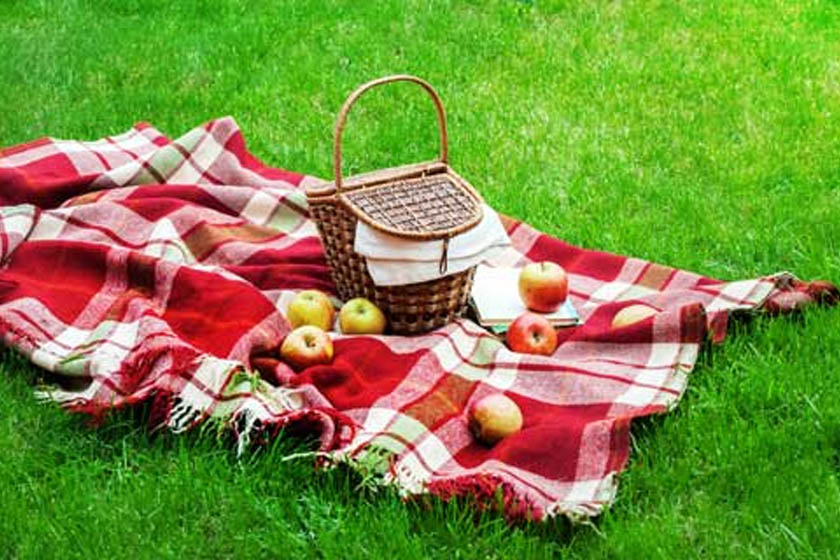
I’m halfway up a mountainside in the area of Las Encartaciones, 18 mi (28.9 km) southwest of Bilbao (northern Spain). My plan is to taste some of the most exclusive foods Spain has to offer, and by “exclusive” I mean “rare”, foods that have come perilously close to extinction. Kneeling down, I begin to prepare the picnic: chorizo (red sausage), salchichón (a sausage, similar to saucisson or salami), cheese, a bean salad, wine. Fifteen black-faced sheep have joined me. They loiter close by, but turn away, their bells clanging out across the valley as they nudge and bump each other, and I get the feeling that they’re showing me their rear ends deliberately. The cheese I am about to eat was made with milk from the very udders between their scrawny black legs. I couldn’t be much closer to the source.
This is a story about slow food. You may already know that story... In 1986, McDonald’s started selling burgers in Rome’s Piazza di Spagna. Journalist Carlo Petrini, after choking with indignation on his morning brioche, decided to do something about the advancing ketchup-ization of the world, and set about founding the Slow Food movement to champion traditional, regionally produced food as an alternative to fast food.
Survival
Slow foods don’t just need champions, they need saviors. Traditional foods can easily disappear from the face of the Earth, never to return. Indeed, by the time you could get a Big Mac and eat it on the Spanish steps in Rome, it was almost impossible to find the carranzana cara negra cheese traditionally made using milk from the black-faced breed of sheep here with me today. Wolves had made a comeback in the area, and while flocks diminished in size, the sheep's milk also fell from favor. This was partly due to a huge growth in sales of another Basque cheese in the 1980s and 90s, Idiazabal, which uses milk from the white-faced carranzana sheep. The black-faced sheep and the cheese, both native to the Carranza Valley in the Basque province of Vizcaya, were about to fall off the map forever.
Extinction is a natural process. As you read this, some unknown strain of Amazonian water gnat is probably biting the evolutionary dust. Do we care? Too late, it’s gone. But when it comes to breeds of animal that have been integral to the human food system for centuries, their extinction impacts on the biodiversity of our food heritage, the living resource that forms the basis of everything we eat. Carlo Petrini never wanted a worldwide ban of McDonald’s, he just wanted to ensure that thousands of local “endangered” foods remained available. And eaten. That’s where I come in. Let’s eat...
Picnic

The cheese is one of the most distinctive I’ve ever tasted. For a sheep cheese there’s a surprisingly strong tang to it, more acidity than a typical Idiazabal, for example. It comes in various stages of cure, but semi-cured is ideal. This one is firm, dense, and quite dry; imagine an aged Wensleydale (PDO cheese produced in Yorkshire, England) with a touch of nuttiness and a complex wash of creaminess following that acidic punch (the milk of the black-faced sheep is high in fat). However, there are also some small pockets of moisture remaining, because these small circular cheeses are pressed by hand, that is, by hands, no weights or pressing plates, just finger power; indeed, the light-to-mid-brown skin is a little irregular, showing the faint indentations of the cheesemaker's fingers. Each cheese is unique, and when you hold one, it feels like an edible testament to the centuries-old rhythms of life in these hard, majestic hills.
I wash the cheese down with a glass of Malvasía de Sitges, a malmsey. It might not be the obvious choice, but it is rich and fragrant, reminiscent of an amontillado. Given the strength and character of the cheese, it’s a pretty amazing match! And in this case we can apply the word “exclusive” with confidence: the Sitges malmsey is produced from a total of only 2.5 ha (6.1 acres) of vines, mostly by the Hospital de Sant Joan Baptista in Sitges. Equally exclusive is the grape, the Malvasía de Sitges, which has thrived in the town for centuries due to a particularly accommodating microclimate and a high acid content.
A nice, exclusive marriage of cheese and wine, then. But how is it that the cheese is still here at all? Ten years ago the carranzana black-faced sheep had disappeared from their steep hillside pastures. However, at this point a curious vessel-cum-biblical-metaphor came to the rescue. Captained by Dr. Mariano Gómez, the vessel was called the Ark of Taste.
Ark of Taste
Seeking to “rediscover, catalog, describe and publicize forgotten flavors”, the Ark is in fact a register of world heritage foods that need our support, published by the Slow Food movement. Whatever the nature of the threat to a particular food, the Ark is about celebrating them and getting us to consume them. From the grey Ukrainian cow and the Madagascan Andasibe red rice to the Montreal melon, many countries are now involved.
Ark foods must be of excellent quality and taste, traditional within a locality or region, and produced on a small, non-industrial scale. They must also conform to the overall food values of Slow Food (high quality, ecologically “clean”, derived from a fair system of production). Spain has about 80 Ark foods, from rare animal breeds, fruit and vegetables, to cider. Those foods in the most dire need of help are given special status as “flagship foods”; in addition to being of fabulous quality, flagship foods normally require direct, immediate intervention (organization, funding, infrastructure, marketing...) to avoid extinction.
There are nine such foods in Spain at the moment, including the carranzana cheese and the Sitges malmsey, and I have most of the others up here on the mountainside for my flagship picnic too. Carlo Petrini implored us to save these foods by eating them: that’s what I intend to do, a modest contribution towards saving the world’s biodiversity.
Pig revival
Today’s meat comes in the form of cured chorizos and fresh salchichón from the Euskal Txerria pig, a native Basque breed that was on the verge of extinction when Pello Urdapilleta, a farmer based in the northeastern province of Gipuzkoa, decided to resurrect it, initially for his family’s own consumption. I went to visit Pello at the palatial caserío (farmhouse) that the Urdapilletas have occupied for generations, and to see the pigs themselves, who live free-range in the surrounding woods and pastures. Thanks in part to the promotional boost that Slow Food can give small producers like Pello, through food exhibitions, tastings, contact with chefs, and in this case the coveted “flagship” status, producing the Euskal Txerria is now a viable business, a gourmet pig to compete with the best that Spain has to offer.
Pello’s dry cured ham immediately reminded me of Ibérico, with plenty of infiltrated fat and that silky sheen on the ham’s surface at room temperature. The flavor of Euskal Txerria is delicate yet seriously porky, with sweet notes and lots of creamy fat, and it’s a great advert for how food conservation can widen and diversify a market. Both fresh and cured, Euskal Txerria has become a firm favorite among Basque chefs, and is earning a fine reputation further afield; a Japanese chef paid the pigs a visit the week before me.
Back at the picnic I slice a couple of pieces of chorizo and offer them to my guests. Not the sheep: there are also two humans with me, José Ignacio Isusi, the shepherd, and Mariano Gómez, who these days is President of Spain’s Slow Food organization. Mariano’s iPhone never stops as he constantly dishes out advice and help to foodies and farmers and Slow Food activists. Meanwhile, José keeps the black-faced sheep in order, and watches as I prepare what must look like the most pretentious lunch that’s ever been eaten in these hills...
Slow salad
I arrange a white bean salad on a plate. The Mongetes de Ganxet are smaller and more delicate than normal beans, hook-shaped, with a buttery texture and skin so fine that it almost disappears in the mouth. They are cultivated in four small areas in eastern Catalonia, where the soil is ideal for this fragile, low-yielding plant, which needs constant watering and is difficult to harvest without damaging the beans. The ganxet has long been noted for its exceptional quality, but its labor-intensive cultivation and harvesting led to much crossing of the strain. Several years ago a collective was set up to guarantee the production of authentic beans produced on traditional, organic lines. Recognition as a Slow Food flagship food followed, helping to establish the ganxet as a product of supremely high quality.
These beans will never replace high-yielding, non-organic beans. At 10 euros per kg, they’re about ten times the cost of the cheapest dried beans in my local supermarket. Some things just ain’t cheap. Try them. They’re worth it. They are very special indeed.
With a stone-faced shepherd looking on, I dress the beans in the slowest way possible. First off, the olive oil is from thousand year-old trees in the Valencian district of Maestrat (Aceite de Olivos Milenarios del Maestrat). Olive trees in other parts of the Iberian Peninsula have been carbon-dated to 2,000 years old, so calling the trees “millenarian” is no advertising hype. Maestrat has one of the world’s largest remaining concentrations of such superannuated trees. Until quite recently people used to uproot the trees and re-plant them in private gardens, sometimes overseas. Local man Ramón Mampel decided to take action. Eighteen years of action. The regional government finally granted the trees legal protection, and the association Clot d’En Simó was founded to make oil.
The farga olives of Maestrat produce an oil that is fresh and floral, with a hint of spice at the finish. Only perfect examples of the hand-gathered olives are used, cold-pressed within six hours of harvesting, and the juices are not subject to filtering processes, all of which leads to an oil with a hugely smooth, vigorous character. Five or six thousand liters per year are now produced, and Slow Food’s recognition of the oil simply gilded what was already a remarkable story of millenarian conservation. You can also follow seven walking routes in the area, taking you past these amazing trees.
Onions and saffron
In the oil I have softened some purple onions from Zalla, in the Basque Country. These onions carry “flagship” recognition, and again came within a heartbeat of extinction. Only one lady, Ana Mari Llaguno, was still growing them, and what little she sold fetched around 70 cents per kilo at a local market. Then four more women became interested, and at the same time Slow Food representatives started showing the onions to local chefs. The Zalla onion has a mild, sweet taste and crunchy, juicy flesh. You can use it raw, but it was also traditionally used in the local salsa vizcaína (an onion, tomato and pepper sauce) and in morcillas (blood sausages). In other words, an old, traditional product with excellent properties. Chefs immediately agreed, and demand sky-rocketed. The five growers can now charge 3.50 euros per kilo, and their purple onions are used in some of Europe’s best restaurants.
My onion dressing also contains an indecent amount of “flagship” saffron. It’s from the area of Jiloca, in the province of Teruel, eastern Spain, which sits at an altitude of 700-900 m (2,296-2,952 ft) and has the perfect climate for growing saffron: long, cold winters and short, hot summers. Half a dozen small-scale producers continue the cultivation of saffron here, a tradition dating back to the Arab settlement in Spain over a millennium ago. About four-fifths of the world’s saffron comes from either Iran or Spain, and of the Spanish product, Jiloca is one of the best, 100% organic.

José occasionally whistles an instruction to his dog, which darts around the sheep as I finalize preparations for the picnic. It was about ten years ago that Mariano and José tracked down and bought some of the very last black-faced carranzana sheep, to try and halt the breed’s seemingly terminal decline. These days they have around 50 head of sheep, with plans to grow to 80 within five years; a few other flocks have also been established, and there are around 200 black-faced sheep now in existence.
The cheesemaker
With the sheep saved, next came saving the cheese. Cue the girl with the cheesemaker's fingers. Begoña Isusi, José’s daughter, went in search of people still making the cheese, and found one old lady, who was 85 at the time. Begoña learned how to do it. Just in time. Since then production has risen steadily, to a current output of around 4,000 small cheeses (c. 350 g / 12.3 oz). Unpasteurized carranzana milk, organic rennet and organic salt are the only ingredients. PVC replicas of the original circular moulds are used, and Begoña’s fingerprints can now be seen in restaurants and on connoisseurs’ cheeseboards everywhere. It’s not available year-round, because although it does keep well enough to guarantee an annual supply, it always sells out. If you can’t get any, Slow Food has a stall in Bilbao’s Ribera Market, where the cheese will cost you 22 euros per kilo. If the market is closed, they often have it on the menu at the Nerua restaurant in the Guggenheim Museum. In fact, they use five of the current flagship foods, and many other restaurants are similarly enthusiastic.
So there it is, a story with a happy ending. Resurrecting the carranzana black-faced sheep’s cheese implied rebuilding the sheep stock; local pastures could then continue in their ancestral use, and the rural economy benefited. Like the Euskal Txerria pigs, the ganxet beans and the other flagship products, it’s a great example of how the demise of a heritage food can be turned around, not through government subsidies, but by reestablishing traditions that can support themselves in the marketplace. Saving rare foods (and breeds) from extinction is about maintaining the biodiversity of our food chain and making non-industrial food production economically viable, and about making sure that these alternatives are the most delicious and authentic possible. Begoña’s cheese ticks all the boxes.
John Barlow's fiction and non-fiction has been published in eight languages. His latest book, Everything but The Squeal, describes a year-long sojourn in his adopted homeland of Galicia, northwest Spain, exploring the gastronomic and cultural significance of pigs.