
Features

  • Organic lettuce. Juan Manuel Sanz/©ICEX
    OrganicAgriculture_1
  • Organic leek from Spain. Juan Manuel Sanz/©ICEX
    OrganicAgriculture_2
  • Organic carrots from Spain. Juan Manuel Sanz/©ICEX
    OrganicAgriculture_3
  • Organic tomatoes from Spain. Juan Manuel Sanz/©ICEX
    OrganicAgriculture_4
  • Organic oranges from Spain. Juan Manuel Sanz/©ICEX
    OrganicAgriculture_5
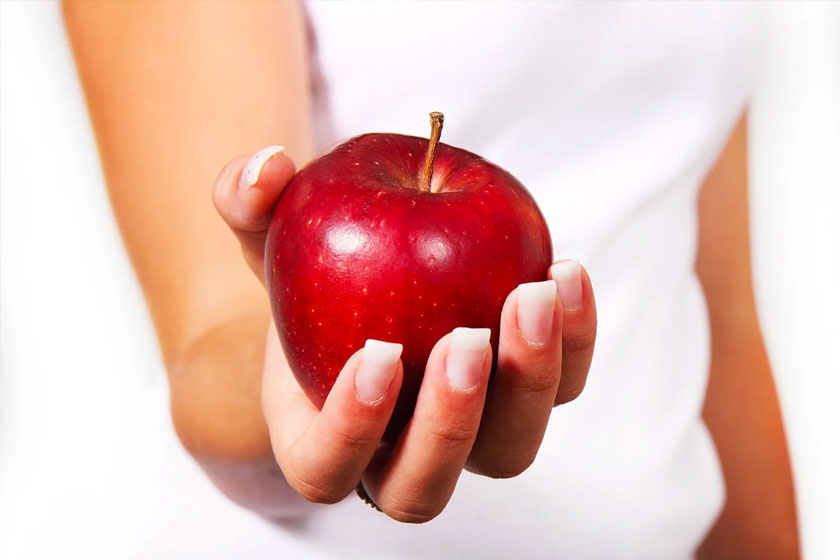
  • Organic apple from Spain. Juan Manuel Sanz/©ICEX
    OrganicAgriculture_6
  • Organic broccoli from Spain. Juan Manuel Sanz/©ICEX
    OrganicAgriculture_7
  • Organic cabbage from Spain. Juan Manuel Sanz/©ICEX
    OrganicAgriculture_8
  • Photo by: Fernando Madariaga/©ICEX
    OrganicAgriculture_9

Features index

Organic Agriculture in Spain

From strength to strength

Spanish organic agriculture produces a wide range of fruits and vegetables. Juan Manuel Sanz/©ICEX

Author: Paul Richardson/©ICEX

Organic agriculture in Spain has gone from strength to strength, conquering overseas markets with impressive ease. But one great challenge still awaits the segment, says Paul Richardson: the unexploited but strangely reluctant market in its own back yard.


How quickly the word has become familiar to us. In the early 1970s it was barely spoken except by a small group of individuals on the fringes of society, considered to be eccentrics, romantics, or “cranks”. Fast-forward 40 years, and it’s a crucial term in the discourse of modern living. We all think we know what it means, but in fact a strict definition is not easy. Here’s one: the word organic (ecológico in Spanish) refers essentially to a form of agriculture which avoids the use of chemical pesticides, weed killers and fertilizers, genetically modified organisms, antibiotics and growth hormones.

Organics in Spain began life relatively late: the first national legislation was made in 1989, though a small amount of organic farming was already going on, and the forward-thinking Vida Sana Association, now major movers and shakers in the Spanish organic scene, had been operating their own informal certification scheme since 1981. A more comprehensive and rigorous Europe-wide regulation (CEE) 2092/91 was followed by the 2007 Euro law on production and labeling of organic goods, which came into effect on January 1st 2009.


Spain’s enormous variety of climates, soil types and ecosystems give it a major advantage over most other European countries in terms of what is possible to grow and when. But there is another factor: the dynamism and flexibility of Spain’s farming culture. Before Spain developed a powerful tourist economy, the country was essentially rural and its economic base essentially agricultural. It is no exaggeration to say that Spanish history is predicated on the energy and expertise of its farming industry. To this extent, it comes as no surprise that the Spanish organic sector has come so far in such a short time. Plotted on a graph, the growth in organic cultivation from the early 1990s until today is illustrated by a steep upward curve, beginning with 4,235 ha (10,464 acres) in 1991 and culminating in 1,602,868 ha (3,960,773 acres) in 2009. Spain is now the EU member country with the largest surface area devoted to organic agriculture, according to Eurostat. The number of organic producers in Spain rose steadily from 17,509 in 2005 to 20,171 in 2007 and to 25,921 in 2009. Organic crops now represent just over 5% of all Spanish agriculture.

Organic lemon from Spain. Photo by: Juan Manuel Sanz/©ICEX


The contribution of individual Autonomous Communities to the organic fresh produce market is in large measure a reflection of their dependence on agriculture in general. The leader in total surface area devoted to organic agriculture is Andalusia with 784,067 ha (1,397,471 acres), though its predominance is partly explained by the region’s vast expanses of olive grove, dehesa (wooded pastureland), animal pasture and other extensive systems. This is followed at some distance by Castile-La Mancha with 119,668 ha (295,706 acres), then by Extremadura (85,806 ha / 212,031 acres) and Aragon (70,494 ha / 174,194 acres).

Think locally, act globally

Murcia is a point of interest in the general panorama of organic production. Though one of the country’s smallest regions, it has a rich horticultural tradition. Murcia also has a long tradition of organic farming and was a pioneer in the introduction of organic fruit, vegetables, rice, nuts and cereals; according to José Pedro Pérez of the Council of Organic Agriculture of Murcia (CAEM), the first crop in Spain to be certified as organic was Calasparra rice, as long ago as 1986.

In the league of producing regions Murcia comes in sixth, with a total of 59,339 ha (146,6239 acres) given over to organics. Proportionally, however, Murcia is far stronger in vegetables and fruit than any other Autonomous Community, since it has very little of the wide-ranging pastures, forests and extensive olive plantations. Organic plantations represent as much as a tenth of the region’s available agricultural land. The region has experienced a boom of its own in recent years: the number of organic growers in Murcia increased from 1,683 to 2,193 in 2008.

Anyone who thought organic agriculture was all about head-in-the-clouds idealism, small scale and idyllic surroundings would be amazed by the organic scene in Murcia. Organic fruit and veg is big business here: a full 90% of local production is exported, overwhelmingly to Germany, bringing in 55 million euros annually to the local economy. I visited Hortamira, one of 174 producers on the books at the CEAM. A co-operative in the coastal flatlands outside Cartagena, Hortamira has 320 producing members and around a fifth of its production is organic, though much of the rest is produced under the Integrated Production System, using a minimum of chemical pesticides and herbicides. The co-op’s organic Pinver brand accounts for an annual turnover of 30 million euros.

The warm, dry climate makes the region of Murcia ideal for winter cultivation of broccoli, celery, cabbage, cucumber, lettuce, peas, and citrus fruits like lemon and orange. At the time of my visit, however, the co-op was busy dealing with a massive crop of peppers. Over the course of the annual pepper “campaign”, so my white-coated guide informed me, up to 3,000 tons (6,000,000 lb) of peppers can pass through Hortamira’s factory in San Javier.

Spain is the EU country with the largest surface area devoted to organic agriculture, according to Eurostat. Fernando Madariaga/©ICEX


Outside in the fields, dirt tracks wound between sprawling greenhouses of which this pepper plantation was just one of many. Nothing about this structure and its contents would say “organic” to the casual observer—until he looked a little more closely at the weeds around the edge of the plastic sheetings (no herbicide allowed) and the pepper plants with the sachets hanging from their stems. Organic farmers around here use biological control to eliminate pests and plant extracts as fertilizers. The phosphate used derives from seaweed, the potassium sulfate from a naturally occurring mineral. The seeds used are organic. Rainwater is collected from the plastic rooftop and channeled into an artificial lake, then administered by a drip system.

Ideologically the farm ticks all the boxes: what is extraordinary is its enormous scale. Farmers around these parts can have as many as 16 ha (39 acres) under intensive organic cultivation. The organic portion of the Hortamira plantations accounts for a total of 59 ha (145 acres), including as many as 40 ha (98 acres) of organic peppers. Next door to the greenhouse lies a citrus farm. My guide waves a hand in the direction of the trees, which are organically cultivated. “Those are lemons,” he says. “Round here we don’t give a thought to the lemon. We don’t appreciate it, we just take it for granted. Not like in Germany. Over there, they fight over a nice lemon, and even more so if it’s organic.”

This casual remark says a great deal about the nature of the organic sector in Spain, which has turned its back on the local market to concentrate on foreign territories. Around 80% of Spanish organic produce is exported, mainly to Germany, the UK, France, Italy and Holland, according to the Spanish Society of Organic Agriculture (SEAE), a non-profit organization whose remit is mainly promotion and development of organic agriculture. The great majority of these products are fresh, non-processed foods, namely fruit, vegetables and nuts which cannot be grown in northern climates.

As a traditionally agricultural economy Spain is still known abroad for its production of fresh fruit and vegetables. As in the conventional sector, Spanish products are associated with ripeness, flavor, vibrant color, and—especially in “southern European” vegetables like tomatoes, peppers, eggplants, as well as pitted fruit, melons, oranges and so on. This explains the high esteem in which Spanish organic produce is held in a market like Germany, the EU’s major importer of organic produce.

But the appeal of Spanish organic products abroad goes further than a general sense of sun-warmed flavor. Antonio Córdoba, who founded a fine food export company called Organic Spanish Market, emphasizes the importance of trustworthiness and professionalism. Foreign customers truly believe, according to Córdoba, that Spanish organics are what they say they are; the efficiency of Spanish supply networks is also highly valued.

Spanish organics: a prophet in their own country?

It’s one of the ironies of the organic scene in Spain that, despite being a hugely important exporter of organic foods in their raw state, the country has few organic manufacturers; the result is that, of all the processed organic foods consumed in Spain, more than half is imported from the same countries that are such enthusiastic importers of organic Spanish fresh produce: Germany, Holland, France, Italy, and the UK.

Around 80% of Spanish organic produce is exported. Juan Manuel Sanz/©ICEX


Why is Spain such a poor consumer of its own organic produce? While Germany and France saw the arrival of supermarkets where everything was organic, in Spain the concept still seemed remote from the majority of consumers. Even today the presence of organic products in the Spanish high street is practically negligible. Organic products represent a tiny fraction, around 2%, of the country’s total food consumption, and annual expenditure on eco products comes in at just 7.70 euros per person per year, compared with the European average of 30 euros.

Several explanations are commonly offered. First, Spanish consumers value freshness above all other considerations and would rather buy an apple grown in the next village by conventional methods than an organic one flown in from New Zealand. Second, the ideological concerns of consumers are not sufficient to compensate them for the higher price of organic products. Third, the Spanish organic sector has no great interest in developing the local market, since it can make a much bigger profit by selling abroad.

Organic food companies now occupy their own patch at any Spanish international food fair of note. Barcelona’s Alimentaria, Madrid’s Fruit Attraction and Zaragoza’s Qualimen all have dedicated organic sections. BioCórdoba is a well-established event covering organic olive oil, wine, fresh produce and prepared foods, and Ecocultura in Zamora. Organic fairs aimed at the national market are less common and occupy a lower profile. Biocultura is one example. This long-standing fair, 30 years in the breach, originated in what might loosely be called the “alternative” scene but has long since moved considerably closer to the social mainstream.

From Murcia I traveled up to Barcelona, where Biocultura was in full swing. Of the 700 stalls, roughly half showcased organic produce in some form or other. Over the course of that weekend I tasted my way through Spanish organic products as diverse as honey, milk, wine, kombucha, rice, chocolate, cheese, pine nuts, beer, olive oil, saffron, and Ibérico ham. There were organic butchers, bakers, and caterers. It all seemed to confirm what I had begun to suspect: that despite the Spanish domestic market’s lack of interest in its own excellent organic produce, a sub-set of the market is both ideologically engaged by the ecological movement and deeply committed to the organic lifestyle.

Small local food marts specializing in organics are also popping up with increasing regularity. Some of these, like Terra Verda, a Valencia-based chain with 15 shops (2004) across the region, have their origins in the traditional Spanish herb and spice store (herbolario). Comme-Bio, a store with a vegetarian restaurant attached, has two establishments in Madrid and two in Barcelona, while Veritas sells 4,000 organic lines in its 19 supermarkets in Catalonia and Andorra.

Spanish cuisine, the value of organic products

The great majority of the organic exports are fresh, non-processed foods. Juan Manuel Sanz/©ICEX


The world of Spanish cuisine has been quick to recognize the value of organic ingredients, seeing these products as an extension or refinement of the existing range of gourmet Spanish products. Juan Mari Arzak, Carme Ruscalleda, Rodrigo de la Calle and Andoni Luis Aduriz are important Spanish chefs known to be committed to the eco cause. The era of the “eco-restaurant” is still in its infancy. The SEAE estimates that there are around 20 offering exclusively organic menus in Spain, a pioneer being the eco-vegetarian restaurant Sarasate in Pamplona; however, the range is increasing.

Initiatives bringing together Spanish chefs interested in organic ingredients are beginning to make their presence felt. An example is Galicia’s Grupo Nove, a coalition of Galician restaurants including Casa Marcelo (Marcelo Tejedor) in Santiago de Compostela, Casa Solla (José González-Solla) in Poio (Pontevedra), and España restaurant (Héctor López) in Lugo. The group has an ongoing commitment to organic produce, notably the fresh produce of Galicia under the aegis of CRAEGA (the Galician organic certification body) and from time to time offer ecological menus.

But the real revolution in Spanish organics has happened through the World Wide Web. For the first time, the information that consumers might previously have lacked about organic practice and products is available at the click of a mouse. More importantly, they can also buy those products online, cutting out the middleman and creating a direct link between producer and consumer.

If information and distribution were the two weak points for Spanish organics, the internet and mail order have made them less so. Take the very good example of Joan Castelló, a farmer in Amposta, Montsià county, Catalonia. Coming from a traditional country family, Joan began farming in 1979 but turned to organics 13 years later, working with the CCPAE (Council of Organic Agriculture of Catalonia) for certification. At first he and his wife sold almost everything to Germany and France, but in 1996 their business took a radical turn. They started a box scheme, where the client takes pot luck on a box of whatever fruit and vegetables are available in season. The price for a 7 kg (15 lb) box, which can be ordered online or by phone: 30 euros, plus delivery. Joan has seen demand increase to the point where the scheme now constitutes a full 85% of his business, and he has loyal customers in Bilbao, Valencia, Málaga and Madrid.

CV

Paul Richardson lives on a farm in northern Extremadura. A freelance travel and food writer, he is the author of A Late Dinner: Discovering the Food of Spain.

Bookmark and Share